


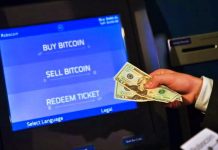
























The number of ways to get Bitcoin is growing all the time, enabling individuals to choose the method of buying bitcoin that best fits their requirements.
Exchanges of cryptocurrencies
Every new prospective Bitcoin buyer will be confronted with a swarm of exchangers vying for their business. Choosing the best one is influenced by a variety of variables, the most significant of which is its location.
Exchanges across the globe are subject to diverse government authorities, necessitating a variety of Know Your Customer and Anti-Money Laundering procedures based on the relevant countries. This is why, depending on the exchange and your region, you must submit personal information in order to open an account and begin trading on some centralised exchanges.
This brings us to the subject of exchange kinds. There are three kinds of crypto exchanges: centralised exchanges, decentralised exchanges, or DEXs, and peer-to-peer exchanges.
Centralized cryptocurrency exchanges are online platforms where you may establish an account with your preferred login information. Depending on the exchange and location, you must additionally submit specific personal details. On centralised exchanges, you may transfer funds to the platform in the form of cryptocurrency or money from a bank account, and you can trade with those funds on the platform, including buying and selling Bitcoin. Depending on the exchange, you may trade a variety of various crypto asset kinds on a single platform. One disadvantage of this approach is that you do not officially retain your own money while they are on the exchange.
DEXs, on the other hand, enable you to do trades directly from your wallet. DEXs are essentially groupings of pooled liquidity for various assets on the blockchain where the DEX is located. DEXs based on Ethereum, for example, make it easier to trade Ethereum-based assets. Bitcoin itself cannot be exchanged on an Ethereum-based DEX, although there are workarounds.
Peer-to-peer, or P2P, trading is another way to purchase and trade Bitcoin. There are many platforms available to facilitate such transactions, each of which offers an escrow service to safeguard both parties and their money.
When searching for exchanges, CoinMarketCap and CoinGecko may be helpful tools. Both websites offer separate tabs for exchanges.
Customers may purchase Bitcoin on PayPal in addition to native crypto exchanges. However, the site does not enable users to transfer Bitcoin outside of the company’s ecosystem and does not provide consumers access to their private keys.
An investment trust
An investment trust is a kind of collective investment in which investors’ money is pooled together through the sale of a set number of shares, which may cause some trust problems when it first starts.
The Grayscale Bitcoin Trust (GBTC), the first publicly traded Bitcoin-related financial instrument, allows individuals to get exposure to the cryptocurrency without physically purchasing or storing it. GBTC is only invested in Bitcoin and gets its value from the value of BTC. Grayscale also provides a variety of investing options for other crypto currencies.
Furthermore, there are a number of Canadian Bitcoin exchange-traded funds, or ETFs, the first of which, the Purpose Bitcoin ETF, was launched by Purpose Investments in 2021. Purchasing a Bitcoin ETF exposes the buyer to Bitcoin via conventional financial channels, but the investment product type varies from GBTC.
Purchasing shares in some businesses may potentially function as a kind of Bitcoin investing exposure. MicroStrategy, a business analytics firm, has, for example, invested billions of dollars in Bitcoin.
Although consumers may ask whether Bitcoin stocks are accessible or how to purchase Bitcoin stocks, this categorization does not exist technically. You may, however, invest in Bitcoin-related businesses, such as those focused on BTC mining, or in corporations that have invested in Bitcoin.
Purchasing Bitcoin with a credit card or PayPal
It may come as a surprise, but regardless of the precise trading method you choose, depending on where you are in the globe, it is still difficult to purchase Bitcoin with a credit card or through PayPal. Exchanges avoid using these payment methods, instead asking customers to link their bank account. Most private vendors are also cautious of such deals, preferring real cash instead.
This is due to so-called “chargebacks.” Most credit card or PayPal transactions may be readily cancelled by contacting the card-issuing firm. Bitcoin transactions are irreversible, and since it may be very difficult to verify that items changed hands after a Bitcoin transfer, this payment method is usually shunned.
ATMs for Bitcoin and other digital currencies
Bitcoin ATMs are popping up in places all over the globe, and the number is steadily increasing. However, these machines often impose transaction fees that are much higher than those found on cryptocurrency exchanges.
To use a Bitcoin ATM, search the internet for a machine in your desired location. You must first create an account with the Bitcoin ATM provider, either online or at the ATM. Opening an account often requires adhering to Know Your Customer, or KYC, compliance, which may include submitting an ID scan and personal information, then waiting for approval.
When you arrive in person, you put cash into the Bitcoin ATM and then either scan your mobile wallet QR code or get a paper receipt with the codes and instructions on how to transfer Bitcoin money to your wallet.
It goes without saying that Bitcoin ATMs are unlikely to emerge in nations where Bitcoin is prohibited or illegal.
Gift cards
Bitcoin may be used to purchase gift cards. Gift cards may also be exchanged for BTC. All you have to do is buy a gift card from any store, go into a site where certain merchants accept gift cards, and finish the transaction.
Always keep an eye out for fraudsters and keep seller reputations in mind, as well as other basic online safety precautions. In general, vigilance and caution should be used while engaging in any crypto-related action.
Precautions When Purchasing Bitcoin
Legal and safety concerns
Bitcoin, in general, has piqued the attention of law enforcement agencies, tax officials, and legal regulators. They are attempting to understand how bitcoin fits into pre-existing frameworks and what standards should be implemented. Your legality in terms of Bitcoin activities may vary depending on who you are, where you reside, and what you do with the commodity.
It’s also important to note that crypto exchanges’ protection and security measures, as well as their legality, differ from platform to platform. Different Bitcoin storage techniques each have their own set of advantages and disadvantages.
Important Notes on Bitcoin Ownership
The safety procedures for safeguarding your Bitcoin are dependent on the storage type you select, with each having its own recommended methods for how to purchase and maintain your Bitcoin. Conducting research on these practises, as well as the kind of storage that is appropriate for you, is an essential aspect of Bitcoin ownership. Bitcoin has less restrictions than conventional walled money, yet such powers come with responsibilities.

Through our customised approach centered on the audience, we are regarded as one of the fastest growing online media brand in the world, renowned for independence in collaborating with newsmakers to unearth important issues and stories through the context of honesty, inclusiveness, and social discourse.
- SportPesa Mega Jackpot Predictions – August 11th 2024 - August 7, 2024
- Ethics On Trial: AI’s Moral Crisis Unleashed! - July 10, 2024
- The End of Jobs: AI’s Career Apocalypse is here! - July 10, 2024


